
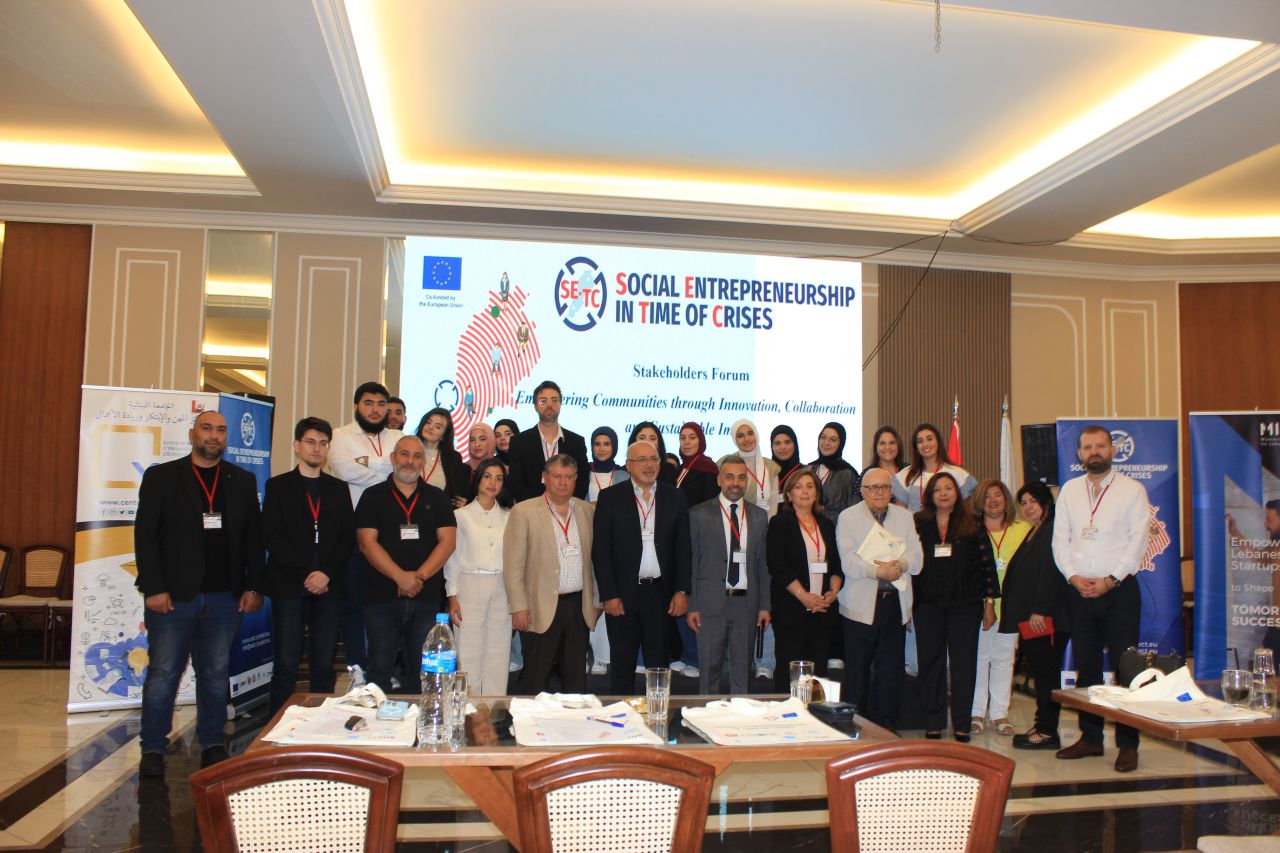
On July 15, 2026, the SE.TC Stakeholders Forum brought together in Tripoli, Lebanon, 49 representatives from universities, municipalities, social enterprises, civil society organizations and student groups to strengthen cooperation around social entrepreneurship and local development.
Hosted by the Lebanese University’s Faculty of Economics and Business Administration, the forum was held under the patronage of Lebanese University President Prof. Bassam Badran in the framework of the EU co-funded Erasmus+ project SE.TC – Social Entrepreneurship in Time of Crises.
The opening session featured Prof. Selim Mekdessi, Prof. Aref Soufi, Prof. May Sayegh and Dr. Adolf Abdallah. Speakers highlighted the role of universities in connecting academic learning with community needs and helping young people develop practical solutions to social and economic challenges.
A round-table discussion, moderated by Prof. Marlène Haydar, brought together representatives of the Al Fayhaa, Al Koura and Zgharta unions of municipalities. The discussion focused on local economic development, youth opportunities, environmental challenges and cooperation between municipalities and universities through research, internships, student projects and technical support.
Representatives of established social enterprises, including the Lebanese Social Enterprise Association, Jadwa06, Masahet Nour and Ruwwad Al Tanmeya, shared lessons from their work. They emphasized the importance of combining social impact with strong business models, access to markets, funding, partnerships and measurable results.
Emerging initiatives also presented their work. Al Khan by SHiFT, Machghalna, Zein Recycling, Grow and Sheghel Emeh showcased projects related to skills development, women’s employment, recycling, youth empowerment, food security and support for local producers.
The programme concluded with a student innovation showcase featuring Meli Melo, Hit4Help, Spinova, Beelal and VerdePlastix. Students received feedback on feasibility, target beneficiaries, prototyping and possible business models.
In his closing remarks, Prof. Mekdessi called for continued cooperation among universities, municipalities, social enterprises and civil society organizations. The forum concluded with a shared commitment to transform local challenges into sustainable social innovation and practical partnerships.